

Traditions explained: Why do liturgical colors change?
By Melanie Sisinni
05/07/2026
After weeks of white and gold during the 50 days of the Easter season, the shift to red on Pentecost Sunday (May 24) is unmistakable. The priest’s vestments blaze crimson. The altar is dressed differently. In many churches, red banners hang or red flowers frame the sanctuary. The change is visual, immediate and intentional.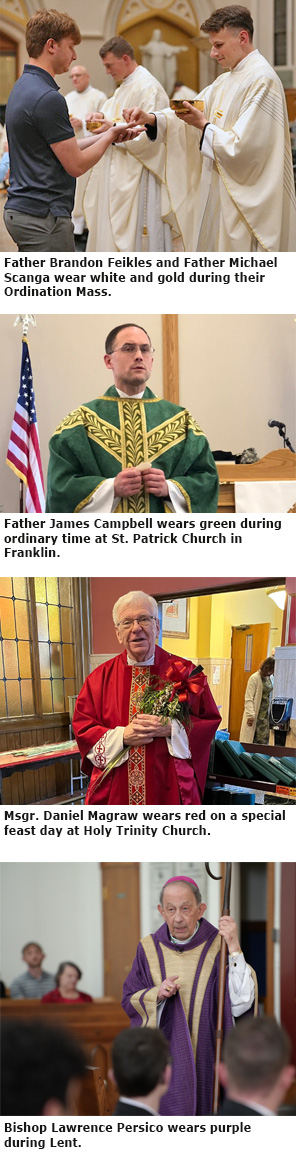 The color red for Pentecost represents the fire of the Holy Spirit who descended upon the apostles as “tongues as of fire” (Acts 2:3), but it also carries another meaning. Red is the color of martyrdom. The same Spirit who came in flame would give the apostles the boldness to preach publicly, suffer persecution and ultimately lay down their lives.
Pentecost is often called the birthday of the Church because it marks the moment when the disciples move from fear to mission. The red vestments proclaim that shift without a single word being spoken.
Color changes occur throughout the liturgical calendar as a visual representation of significant moments. The colors worn at Mass reflect the spiritual meaning of the season and help form the faithful through visual cues. Even before a word is proclaimed, the sanctuary signals what kind of time we are in.
White and gold are the colors of celebration. They are worn during the Christmas and Easter seasons, on solemnities of the Lord, and on feasts of saints who were not martyrs. White signifies joy, purity and glory.
Red, in addition to Pentecost, is worn on Palm Sunday and Good Friday, and on feasts of martyrs. The same color that marks Christ’s suffering also marks the Spirit’s power, reminding the Church that love and sacrifice are inseparable.
Green fills much of the liturgical year. Known as Ordinary Time, these weeks are anything but unimportant. Green symbolizes growth. It reflects the steady, ongoing work of discipleship and the gradual deepening of faith in daily life.
Purple appears during Advent and Lent. It is a color of preparation and penance. In Advent, it signals watchful expectation as the Church awaits Christ’s coming. In Lent, it invites repentance and reflection. The subdued tone of purple prepares the heart for the brightness that will follow.
Occasionally, rose (not pink) appears. It softens the purple in Advent and Lent with a hint of joy, reminding the faithful that celebration is drawing near.
Even black, though less common today, may be used at funeral Masses as a sign of mourning, while white increasingly emphasizes Christian hope in the Resurrection.
These colors are not decorative preferences. They teach beauty and repetition. Through the changing colors of the liturgical year, the Church tells the story of salvation not only in words, but in sight. The sanctuary becomes a canvas, and the faithful are invited to see and enter more deeply into the mystery being celebrated.
-